
Jump to
In this guide, we’ll explore various aspects of the Pitweiler, including its history, temperament, grooming needs, training, and health considerations.
A Brief History of the Parent Breeds

To understand the Pitweiler, it helps to know a bit about its parent breeds. The Rottweiler traces its origins back to the Roman Empire, where dogs resembling modern-day Rottweilers were used to herd livestock and later served as police and rescue dogs. On the other hand, ‘Pit Bull' is a term that encompasses several breeds, including the American Staffordshire Terrier and the American Pit Bull Terrier, historically bred for blood sports that required immense stamina and determination.
Physical Appearance
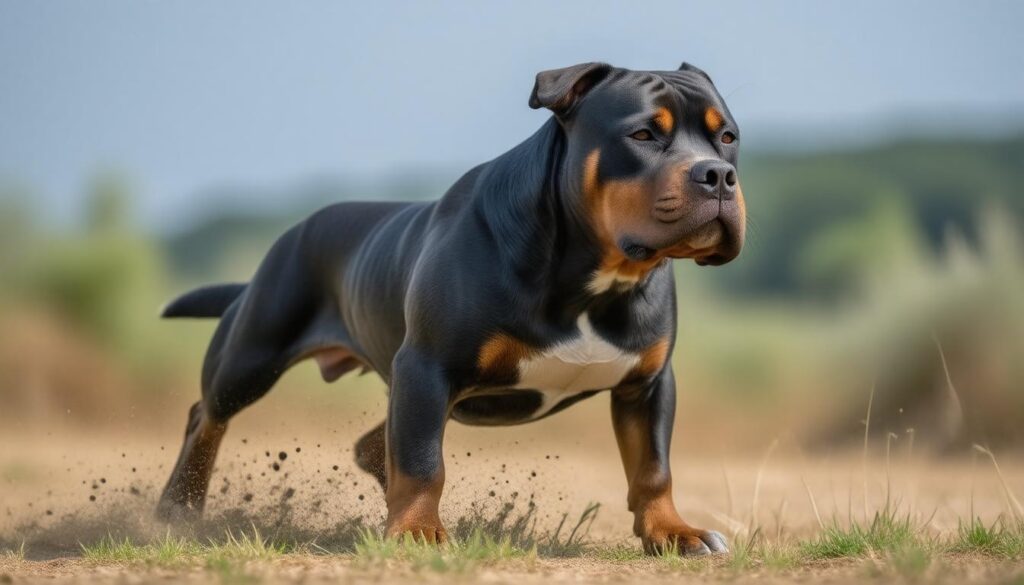
Pitweilers can vary significantly in size and appearance, depending on the traits inherited from their parents. Generally, they are stocky and muscular with an average weight ranging between 50 to 90 pounds. While Rottweilers are typically large and strong, Pitbulls offer a slightly smaller frame. The coat of a Pitweiler is usually short and easy to maintain, with colors ranging from the classic black and tan of the Rottweiler to the diverse shades found in Pitbulls, including brindle, blue, or red.
Temperament: Loyal and Protective
Both Pitbulls and Rottweilers are recognized for their loyalty and protective instincts. A Pitweiler often inherits these traits, making them great family companions and watchdogs. They are generally affectionate toward their families and can be friendly with children, but early socialization is critical. This practice helps them develop confidence and mitigate any tendencies toward wariness of strangers.
The hybrid’s temperament can vary based on which parent breed’s characteristics dominate. Whether more excitable and playful like the Pitbull or more composed like the Rottweiler, providing structured training is essential for a well-rounded pup. Due to their strong protective instincts, they may act as a deterrent to potential intruders while being loving companions at home.